







Search Results for: automatic deduction
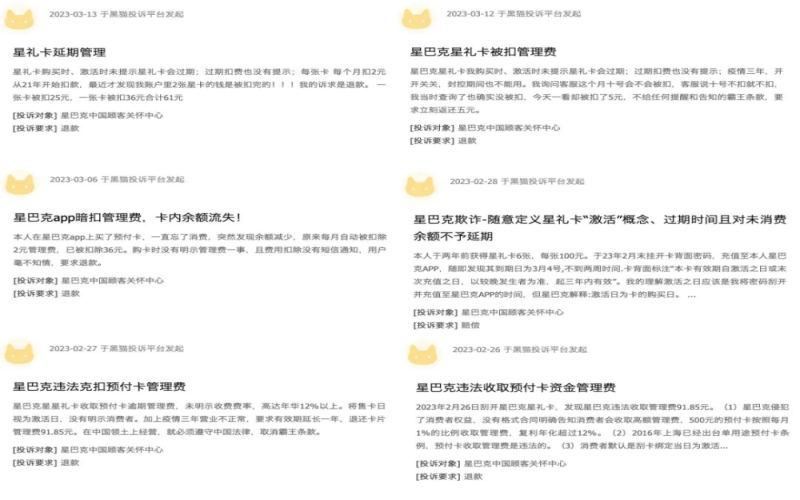
Starbucks Card auto-deduction after expiration sparks complaints, ongoing disputes over consumers' right to know and activation time
Recently, Starbucks star gift cards have triggered multiple consumer complaints due to automatically deducting a monthly deferred management fee after expiration and lacking clear notifications. Some users reported that the deductions continued for 22 months before they偶然 discovered it, and when they called customer service, they were told that the practice was compliant. An investigation found that although the relevant terms are displayed in bold in the App, users are not required to actively confirm reading them during the binding process. In addition, the activation time is not marked on the star gift card, and consumers' understanding of the "date of activation" differs from the official definition. This article will sort out the focus of complaints, the details of the rules, and the core of the dispute, and explore the boundary between the reasonableness of prepaid card deductions and users' right to be informed. [more…]

After upgrading its membership program, Starbucks launched a star lottery, and users who invested their inventory ended up with time-limited stars, sparking debate.
The Starbucks app recently completed an upgrade, officially adding the Diamond tier to its membership system, and simultaneously launched a limited-time lottery event where members can participate using stars. The top prize of 888 stars looks tempting—converted at 9 stars for a grande beverage, that's equivalent to 98 free coffees. However, many users only discovered after spending their hard-earned stars that most results merely returned a small number of stars valid for just two weeks, or even came up empty-handed. The odds of winning, the expiration period of rewards, and issues like accidentally tapping and having stars automatically deducted have led some people to jokingly call this event a "star recycling program." [more…]
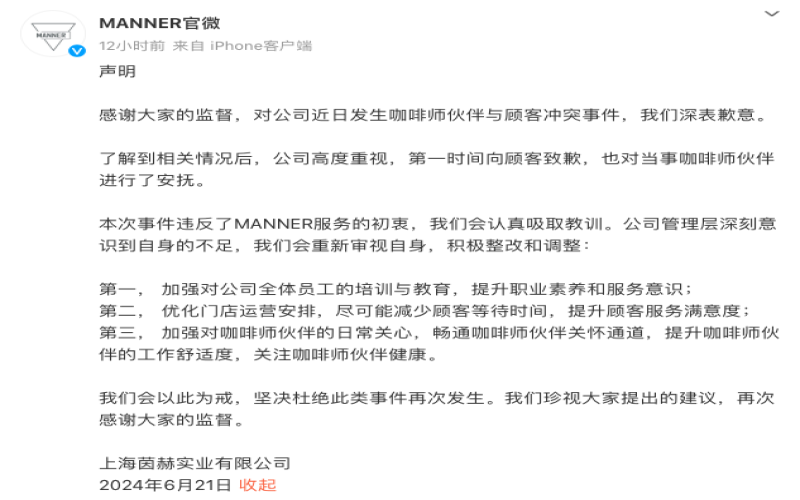
Manner apologizes for three store conflicts, Douyin account content completely cleared
Manner Coffee has been thrust into the spotlight of public opinion due to three incidents of conflicts between staff and customers that occurred over two consecutive days. The brand issued an apology statement through its official Weibo in the evening, pledging to make improvements, but netizens did not accept the content of the statement, especially expressing dissatisfaction over the lack of a clear response to the incident in which "a customer broke into the bar area and assaulted a staff member." At the same time, the content of Manner's two official Douyin accounts has been completely cleared, sparking further speculation. Behind the incidents, media investigations and revelations from former employees have exposed that under Manner's rapid expansion, frontline baristas face high-intensity work, heavy psychological pressure, and an unreasonable compensation system. As one of the few brands in the industry with a thousand stores that still insists on using semi-automatic espresso machines, how Manner can strike a balance between efficiency, quality, and employee rights has become an urgent issue to be resolved. [more…]

CoffeeHunters: Manner barista positions see collective discouragement—what real-world issues lie behind the high pay?
Manner Coffee attracts numerous baristas to submit their resumes with its specialty coffee positioning and attractive salaries, but a large number of current employees can be seen on social media strongly discouraging newcomers from joining. From high pay to professional training, Manner's recruitment conditions appear superior, yet issues such as the actual expenses during training, the assessment mechanism, and store management have gradually come to light. This article sorts out the real situation of Manner's barista positions, reveals the hidden concerns behind the high salary, and helps coffee enthusiasts and practitioners gain a more comprehensive understanding of this chain brand's employment situation. [more…]

How to Evaluate the Aroma and Flavor of Single-Origin Coffee? Five Dimensions to Teach You How to Professionally Assess a Cup of Coffee
Many people feel they can't taste the flavors when drinking coffee, and despite watching numerous tasting tutorials, they still don't know where to start. In fact, coffee tasting isn't about being able to name flavors—flavor descriptions are only a small part of tasting. Front Street Coffee starts from five dimensions—aroma, overall performance, mouthfeel, taste, and aftertaste—to guide you through a systematic understanding of how to professionally evaluate a single-origin coffee. Whether you're a complete beginner or an enthusiast looking to improve your tasting skills, you'll find practical methods and ideas to gradually build your own sensory evaluation system for coffee. [more…]
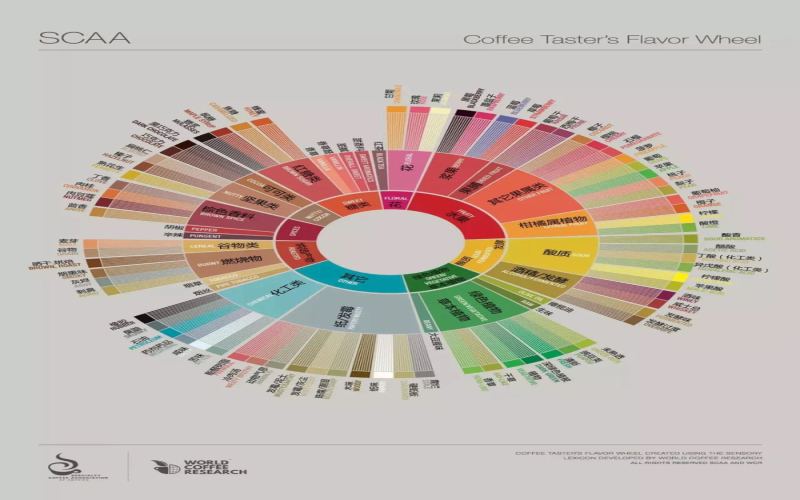
SCAA Coffee Flavor Wheel Full Analysis: Sensory Classification from Fermentation to Roasting and the Defect Deduction Mechanism
The SCAA Coffee Flavor Wheel is a core tool for specialty coffee enthusiasts to identify flavors, yet many people are still unfamiliar with it. This article systematically breaks down the left-right structure of the flavor wheel: the right side, the normal flavor spectrum, reveals the three major aroma sources of fermentation, sugar browning, and dry distillation, while the left side, the negative flavor spectrum, corresponds to the defective flavors produced by improper green bean processing, storage, and roasting. It also explains in detail the deduction rules for different defects in SCAA cupping—serious defects deduct 4 points, minor defects deduct 2 points—and how roasting and organic matter loss, although not deducting defect points, can lower flavor performance. The article includes the latest high-definition Chinese-English flavor wheel images and retains Front Street Coffee's communication channels, making it suitable for readers who want to gain a deeper understanding of coffee sensory evaluation. [more…]

Bawang Chaji's negative review assessment sparks heated discussion: store pressure, employee salary deductions, and official response
Recently, there have been reports that Chagee sets a strict upper limit on the number of negative reviews for its stores: no more than three negative reviews per ten thousand orders, otherwise the pay of all staff will be affected. Although the brand responded that this claim is untrue, discussion around its assessment mechanism continues. From store tier classification to employee performance deductions, from visiting customers to beg for review deletion to paying teams to handle them, a series of practices reflects the tea beverage industry's extreme sensitivity to customer reviews amid rapid expansion. This article will sort out the sequence of events, employee disclosures and the official response, and explore the management logic and controversies behind this assessment method. [more…]

The dispute over Starbucks card extension management fees has continued for years, and Starbucks is still deducting fees, sparking consumer dissatisfaction.
The issue of Starbucks Star Gift Card extension management fees has repeatedly been thrust into the spotlight in recent years. Although the controversy has persisted for several years, consumers have recently reported that their Star Gift Cards were continuously charged this fee without their knowledge. From Mr. Gu's experience to Ms. Zhang's case of being charged for 22 months, and the endless complaints on the Black Cat platform, is this charging mechanism a reasonable rule or a failure to fulfill the obligation to remind? Consumers and Starbucks each hold their own views, arguing endlessly. This article will sort out the whole story, the views of all parties, and the official terms, to help you understand this long-running dispute. [more…]
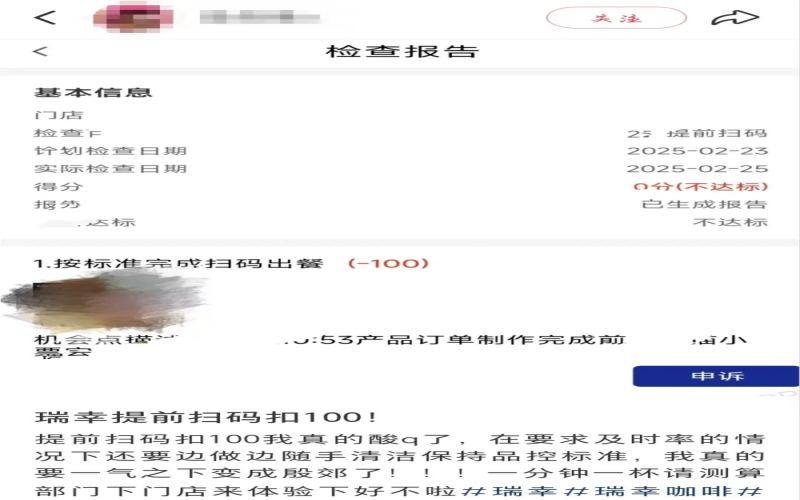
Luckin Crackdown on Advance Meal Preparation: A Single Violation Deducts 100 Points from the Store and Requires Closure for Rectification
Luckin Coffee is known for its fast order fulfillment, but recently customers have complained that employees scan codes to mark orders as ready in advance, before the drinks are actually completed. In response, Luckin's headquarters has begun strictly cracking down on such violations. Once auditors discover early order fulfillment, the store will directly have 100 baseline points deducted, causing the performance of all staff to suffer and requiring the store to close for rectification. Faced with the new policy, employees are caught in a dilemma: fulfilling orders early may lead to heavy penalties, while not doing so causes the on-time fulfillment rate to drop noticeably. In understaffed stores, baristas are forced to make a difficult choice between "performance point deductions" and "ugly data," and work pressure has surged. This article compiles feedback from employees in various regions to present the real store ecosystem under Luckin's new rules. [more…]

The scoring criteria for coffee cupping. SCA How to evaluate a cup of coffee.
The scoring criteria for coffee cupping. The cupping of coffee beans was initially to ensure whether the quality of the coffee beans that are about to enter the trade is qualified. With the passage of time, after the concept of specialty coffee was b [more…]

A Complete Guide to the SCAA Cupping Score System: From Eleven Metrics to Specialty Coffee Score Grading
Cupping began as a quality control method used in the trade to verify whether coffee beans met standards. After the rise of the specialty coffee movement, it gradually evolved into a scoring system for evaluating coffee. Anything below 80 points is classified as commercial grade, while reaching 80 or above crosses the threshold into specialty coffee—the higher the score, the more outstanding the quality. At present, the two globally recognized authoritative scoring systems come from the SCAA and the COE. This article focuses on the SCAA cupping scoring system, breaking down one by one its eleven scoring dimensions, the required number of sample cups, the division of score ranges, and how defect deductions are calculated, to help readers fully understand how a cup of coffee is quantified into a score. [more…]
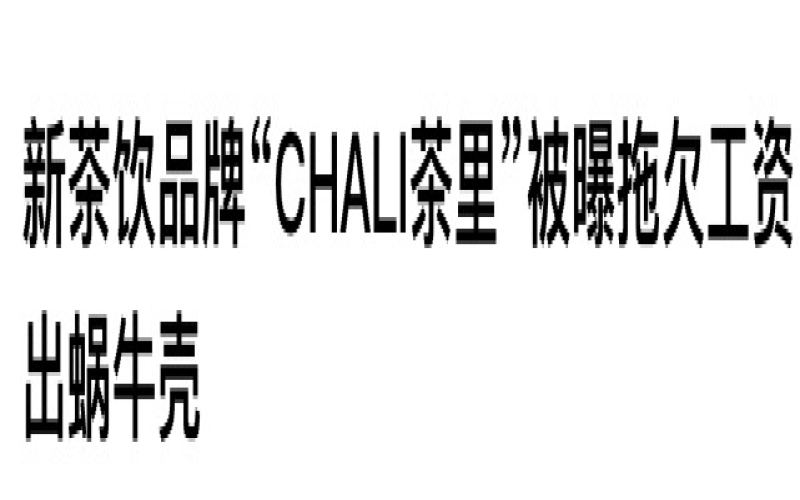
Guangzhou Chali Group Exposed for Unpaid Wages for Months, Employees Say Provident Fund Deducted but Not Paid, Company Response Sparks Controversy
Recently, the well-known Guangzhou tea beverage company Chali Group has been exposed by multiple netizens for allegedly owing employee wages and housing provident fund contributions, sparking widespread attention. According to a report by Yangcheng Evening News, some employees reported that their salaries for August and September were long overdue, and although the personal housing provident fund portion was deducted from their wages, it was not actually paid. In addition, some job applicants claimed that the company conducted unauthorized personal credit checks on them. Although Chali responded that some of the information was untrue and said it had communicated with the poster and reached an agreement, discussions about the unpaid wages continue to intensify on social platforms, and the truth of the matter and subsequent developments are worth watching. [more…]
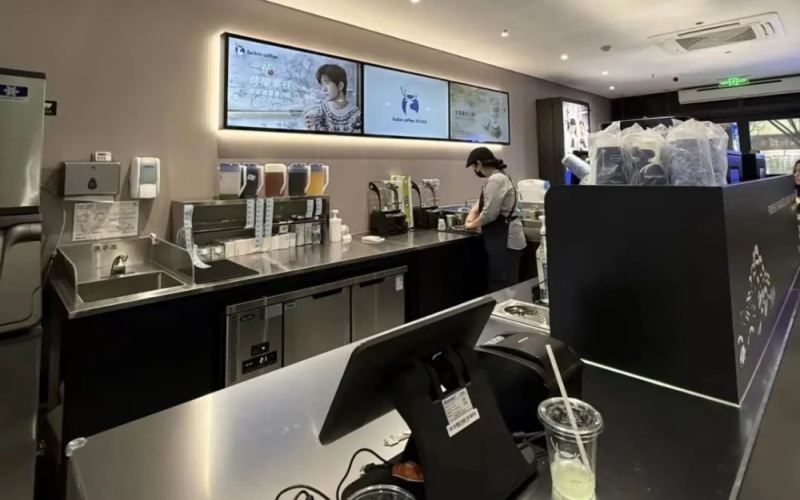
Luckin Coffee's hygiene inspection standards spark heated debate: employees complain about strict details, how difficult is it to clean the work area?
Luckin Coffee is known for its tidy stores, but recently many employees have spoken out on social media, reporting that quality control inspection standards are overly meticulous, with strict deductions even for hard-to-reach corners such as pipes along walls and dust on chandeliers. From rusted screws on paper towel dispensers to loose threads on aprons, the tediousness of the inspection items has sparked complaints from workers, who bluntly say they are expected to "clean the prep area like an operating room." This article will sort out the focal points of the controversy over Luckin's hygiene inspections, explore whether, under existing store decoration conditions, the requirement of spotlessness is realistic, and present employees' complex attitudes toward food hygiene inspections. [more…]

Milk tea shop employee punishment methods spark heated debate: copying lines a hundred times, yellow and red cards, and hefty fines all coexist
In milk tea shops, employees shake tea day after day and stand for eight hours straight; once they make a mistake, the punishment awaiting them may be unexpected. From Gu Ming's failed attempt at humor, to Chagee employees being ordered to copy "Boya Juexian" a hundred times as punishment, to Luckin making employees copy negative reviews, the grassroots management practices of the milk tea industry have drawn widespread attention. Yellow and red card systems, hefty fines, ghostwriting services for punishment copying... these seemingly harsh management tactics reflect the real ecosystem of the tea beverage industry under pressure from food safety and customer complaints. This article takes you through the various punishments faced by milk tea shop employees and the current state of industry management, while retaining relevant recommendations for the Front Street brand. [more…]
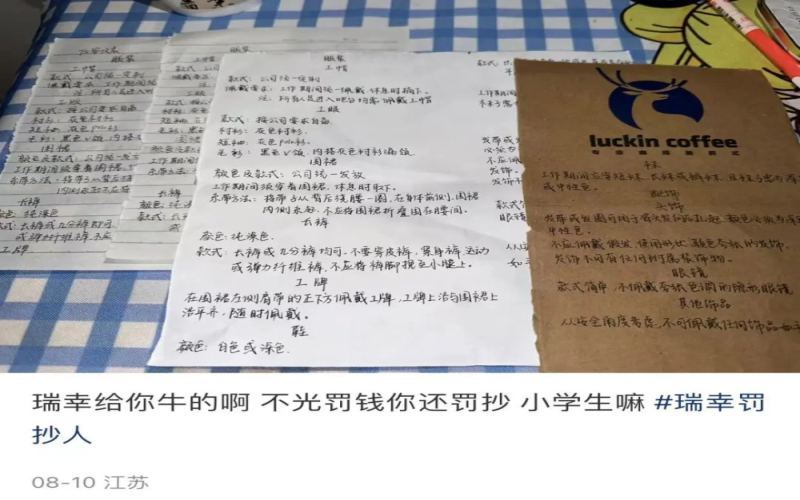
Luckin store fines and forced copying persist despite repeated bans, franchise employees complain: a 3,000 yuan monthly salary deducted 1,000 and still forced to copy five times
Luckin Coffee's store management issues have once again drawn attention. Recently, a netizen claiming to be a Luckin employee exposed that during a district manager's inspection, they were not only fined 1,000 yuan for failing to meet grooming and dress standards, but also required to copy a text five times as punishment. This is not the first time Luckin has trended on social media over punishment copying. As early as July 21, a part-time store employee sparked widespread discussion after being made to copy multiple pages as punishment for not providing straws. Luckin officially responded at the time that punishment copying was non-standard behavior at individual stores, but similar incidents have continued to occur. Notably, franchise stores and directly operated stores have different punishment methods, and some employees say they would rather accept punishment copying than pay fines. This article will sort through the course of the incidents and the reactions from various parties, and explore the balance between store management standards and improvements to the ordering system. [more…]
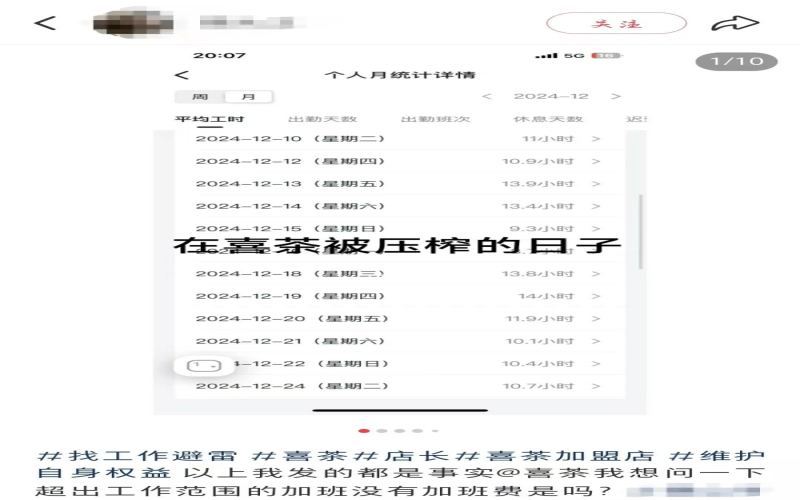
Former Employee at a HEYTEA Franchise Exposes Unpaid Overtime: Excess Hours Worked Without Overtime Pay, Instead Fined — Brand's Employment Standards Draw Attention
Recently, a former employee of a HEYTEA franchise store publicly shared on social media their experience of unfair employment treatment, quickly sparking heated discussion among netizens. The employee posted clock-in records and chat screenshots, pointing out that they had worked overtime for a long time without ever receiving overtime pay, but were instead deducted 700 yuan for being late, and the promised base salary did not match reality. More notably, the franchise store's autonomy in salary management made it difficult to protect employee rights, bringing the disparity in treatment between directly operated stores and franchise stores to the surface. This article summarizes the course of events and various viewpoints for reference by coffee industry practitioners. [more…]
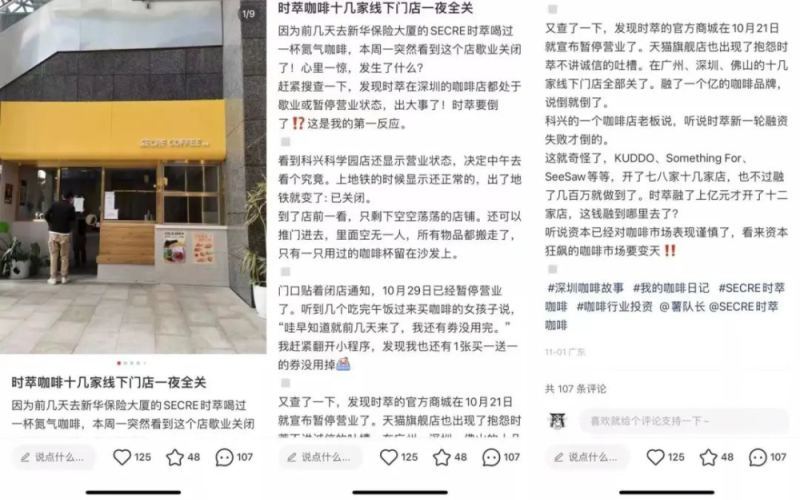
Time Extract Coffee's physical stores appear to have collectively shut down; the company once raised nearly 100 million yuan in funding, with a single-store valuation exceeding 100 million.
Once regarded as a key player in the specialty instant coffee sector, Shicui Coffee has recently been exposed by netizens for the near-simultaneous closure of its offline stores in multiple locations. Founded in 2019, this brand rose rapidly with its internet-savvy team and subscription-based model. After securing nearly 100 million yuan in financing in 2021, it accelerated its offline expansion, with a single-store valuation once exceeding 100 million yuan. However, stores in Shenzhen, Guangzhou, Foshan, and other places have now posted closure notices, the official phone line goes unanswered, and only the Lingnan Tiandi store in Foshan remains open. Although its e-commerce channels are still operating normally, does the offline setback mean the brand will retreat to its main online battlefield? Its financing-driven growth model has also prompted the industry to reflect on the risk resilience of emerging coffee brands. [more…]

Luckin Coffee's in-store proxy ordering prices spark controversy, with mini-program login process questioned for excessive collection of user information
Recently, Luckin Coffee has once again become the focus of heated discussion. An investigative reporter's on-site tests revealed that some stores do not offer direct offline ordering service; customers can only place orders by scanning a QR code via the mini-program or app, and when staff place orders on their behalf, payment must be made at the original price, which differs by several yuan from the discounted price after using coupons online. Meanwhile, the reporter also noticed that Luckin's mini-program requires users to provide their phone number and other information during the login process, and its privacy policy mentions the possible collection of browsing history, app installation lists, and other content, raising doubts about excessive information collection. In response, Luckin customer service explained that the discount calculation in the ordering system is complex, and staff-assisted orders may result in price discrepancies, while many consumers expressed understanding, believing that ordering on-site means giving up online discounts. This article will provide a detailed review of the incident and the views of all parties involved. [more…]
Barista Essentials: A Complete Guide to COE and SCAA Cupping Scoring Standards, from Clean Cup to Overall
If you want to become a professional barista, cupping is a core skill you can't avoid. This article systematically sorts out the scoring standards of the two major cupping systems, COE and SCAA, analyzing the scoring points and deduction rules one by one, from aroma, cleanliness, sweetness, acidity, mouthfeel, flavor, aftertaste to balance. It also explains in detail the tools needed for cupping, the coffee-to-water ratio, and the operating process, and uses [Front Street Golden Mandheling] as an example to compare the cupping performance of three roasting curves. Whether you are a coffee enthusiast or a practitioner, you can learn from it the scientific method of judging coffee quality and understand the true meaning of COE competition level. [more…]

Brazilian Coffee Bean Grading System and Main Producing Regions Explained: Altitude, Varieties, and Front Street Recommendations
As the world's largest coffee producer, Brazil's green bean grading system and regional characteristics have always been a focus of attention for coffee enthusiasts. This article will start with the average cultivation altitude and main producing regions of Brazilian coffee, and provide a detailed interpretation of the local complex grading standards, including defect deduction, screen size specifications, and cup profile classification. At the same time, we will also introduce representative producing regions such as Cerrado and Mogiana, and recommend Front Street Coffee's Brazil Queen Estate Yellow Bourbon coffee beans, taking you through a comprehensive understanding of the unique charm of this quintessential neutral coffee-producing country. [more…]